
Friday, 10 February 2012


Magazine Vocabulary
There are numerous lexis that I will be using throughout my coursework, such as:
Masthead- It's found on the cover of a newspaper, usually at the top, and gives the name of the newspaper/magazine/newsletter.
House Style- The house style distinguishes the newspaper/magazine/newsletter from it's competitors, as it's known for it's distinctive design.
Headline- A headline is the title of the newspaper/magazine/newsletter article. It is usually in a large font across the top of the front page, and placed above or below the masthead.
Sub-headline- A title, or heading, of a subdivision.
Dateline and price- The dateline shows the date of the newspaper/magazine/newsletter's release date, and the price lets the reader know how much it will cost.
Byline- The byline is the line usually located under the headline which tells the audience the name of the writer.
Puff- A puff is a section or graphic that promotes other contents in that edition.
Earpiece area- The earpiece area is also known as the pug feeder. The pug's (logos and promotions) are placed here. They're usually at the top left and right-hand corners of the paper.
Strapline- The strapline is used to sum up a story.
Support story- A support article is a minor story that can be seen on a small area of the front cover, and often include a cross-reference.
Lure- The lure is what makes the consumers want to read the article.
Splash head- This is the main story on the front page of a newspaper, it features the most important news in a striking way.
Page lead- The page lead is the first paragraph of a newspaper/magazine/newsletter article. It should inform the reader of the basic content of the story, the rest of the article will then improve on it. The lead is usually written in bold or capitals.
Cross-reference- This tells the reader that the article carries on into another page; "turn to page 2".
Photograph caption- When photos are used, there are normally a sentence or two underneath that describe the photograph.
Masthead- It's found on the cover of a newspaper, usually at the top, and gives the name of the newspaper/magazine/newsletter.
House Style- The house style distinguishes the newspaper/magazine/newsletter from it's competitors, as it's known for it's distinctive design.
Headline- A headline is the title of the newspaper/magazine/newsletter article. It is usually in a large font across the top of the front page, and placed above or below the masthead.
Sub-headline- A title, or heading, of a subdivision.
Dateline and price- The dateline shows the date of the newspaper/magazine/newsletter's release date, and the price lets the reader know how much it will cost.
Byline- The byline is the line usually located under the headline which tells the audience the name of the writer.
Puff- A puff is a section or graphic that promotes other contents in that edition.
Earpiece area- The earpiece area is also known as the pug feeder. The pug's (logos and promotions) are placed here. They're usually at the top left and right-hand corners of the paper.
Strapline- The strapline is used to sum up a story.
Support story- A support article is a minor story that can be seen on a small area of the front cover, and often include a cross-reference.
Lure- The lure is what makes the consumers want to read the article.
Splash head- This is the main story on the front page of a newspaper, it features the most important news in a striking way.
Page lead- The page lead is the first paragraph of a newspaper/magazine/newsletter article. It should inform the reader of the basic content of the story, the rest of the article will then improve on it. The lead is usually written in bold or capitals.
Cross-reference- This tells the reader that the article carries on into another page; "turn to page 2".
Photograph caption- When photos are used, there are normally a sentence or two underneath that describe the photograph.
Monday, 6 February 2012
Feminist Theory
In 1975, the British feminist film theorist, Laura Mulvey, published a well known essay called 'Visual Pleasure and Narrative Cinema'. In this essay she established the 'male gaze', as Mulvey believed media audiences view women from a heterosexual male perspective. For feminists this meant: how men look at women, how women look at themselves and how women look at other women.
This issue of GQ showed Dianna Agron and Lea Michele in revealing clothes, with the assumption that men will buy the magazine. This magazine cover portrays both the girls as 'objects', whereas Corey Monteith has remained fully clothed whilst holding them in a sexual way.

This issue of GQ showed Dianna Agron and Lea Michele in revealing clothes, with the assumption that men will buy the magazine. This magazine cover portrays both the girls as 'objects', whereas Corey Monteith has remained fully clothed whilst holding them in a sexual way.
Friday, 3 February 2012
Music Magazine Questionnaire
Could you please complete this short questionnaire about music magazines by clicking here.
Qualitative And Quantitative Questions
There is a distinct difference between qualitative and quantitative questions. Qualitative questions are known as open questions as there's space for everyones personal answers, such as 'what is your favourite genre of music and why?'. Therefore you get a more detailed, realistic response.
However, a quantitative question is closed as you are given a set of answers to choose from. For example, 'what sex are you?' would have the two options 'male' or 'female'. This means that the answers are easier to collate and can be compared to each other: saving a lot of time, as all the answers are relevant to the question.
I have chosen to do the majority of my questionnaire using quantitative questions. Although I will also include some qualitative questions, so I recieve a few more detailed responses.
Thursday, 2 February 2012
Rule Of Thirds And Depth Of Field
Rule of Thirds.
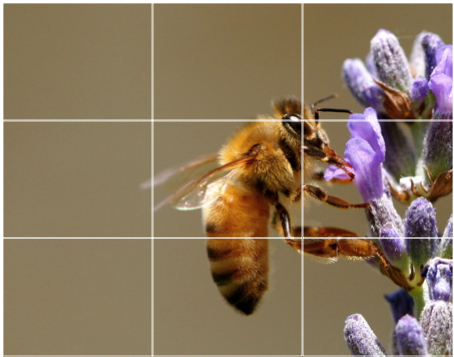

Sometimes only part of the subject in a photograph appears sharp. The depth of field is the zone of sharpness, but it doesn't abruptly change from sharp to unsharp. Everything in front or behind the depth of field loses sharpness.
Subscribe to:
Posts (Atom)